









This theory was developed in the 1990s by the National Cancer Institute in the United States, based on the idea that health and diet are closely related.
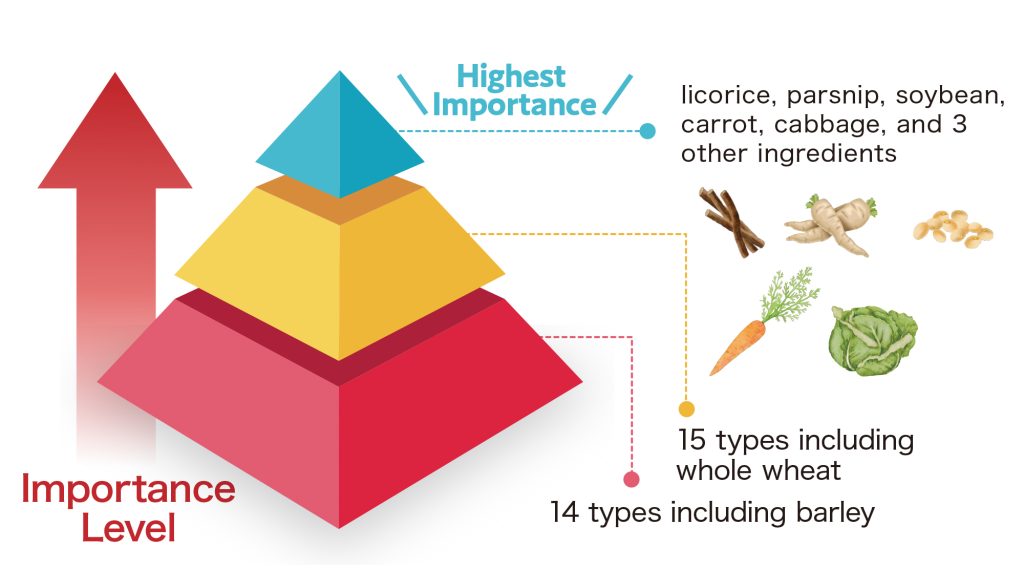
From a wide range of foods, approximately 40 plant-based foods rich in phytochemicals were selected and arranged in a pyramid according to their level of importance.

Phytochemicals are compounds such as pigments, aromas, pungent substances, and viscous components that plants produce to protect themselves from harmful factors like ultraviolet radiation and insects. They are abundantly found in vegetables, fruits, and legumes.
Although phytochemicals are not essential nutrients, they have beneficial effects on the body. It has become increasingly clear that they are important components for maintaining good health and are worth including in the diet. They are sometimes referred to as the “seventh nutrient.”

ZOOTTO contains five types of vegetables—licorice, parsnip, soybean, carrot, and cabbage—selected from the eight ingredients classified at the top of the pyramid.

The remaining three ingredients not included are garlic, ginger, and celery.
The reason for not including them is that these vegetables contain stimulating compounds, which were judged not to be necessarily favorable for the palatability and preferences of different animals.

The Designer Foods Theory is based on the “Designer Foods Program” by the U.S. National Cancer Institute. However, this program does not originate from data derived from a single animal experiment.
Instead, it comprehensively evaluates a large body of accumulated epidemiological studies, as well as animal experiments on various food components, and ranks foods that are considered to have potential benefits for health maintenance and cancer prevention, organizing them into a pyramid structure.
In other words, the “Designer Foods Theory” is a framework that classifies and systematizes foods expected to have beneficial effects based on scientific evidence. Its foundation is supported by a wide range of animal studies and epidemiological research.



